
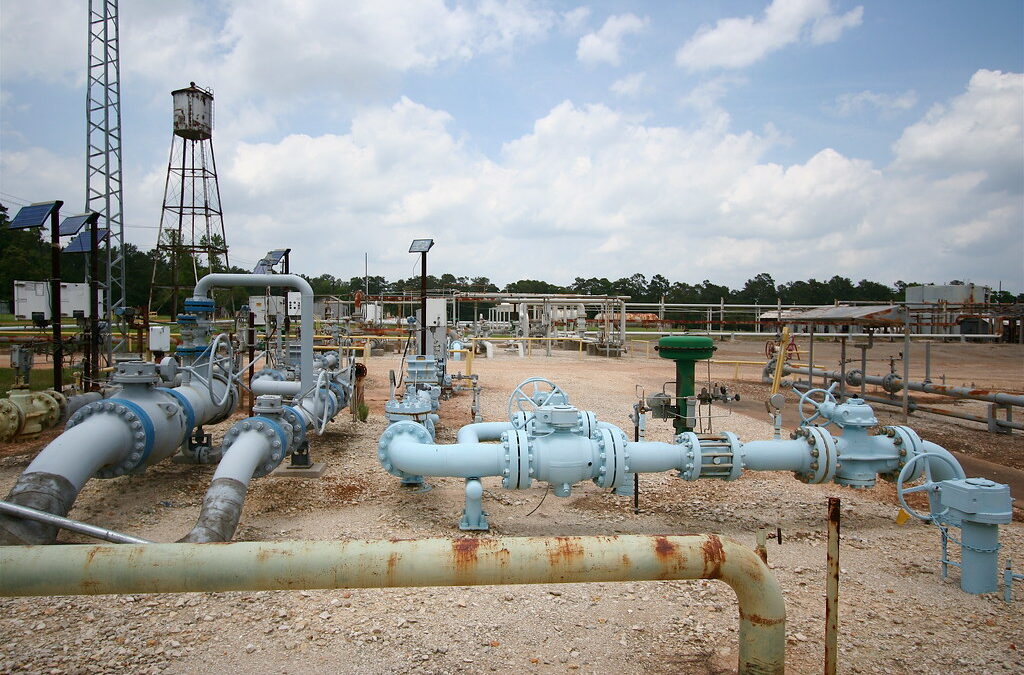
Source: Flickr
With more than two-thirds of all new U.S. pipeline capacity originating in the Lone Star State, Texas continues to pave the way with sound investments, infrastructure, and results.
For much of the first half of 2026, the Permian Basin told a story that underscored a fundamental truth about American energy: production without infrastructure is potential without purpose.
Natural gas prices at the Waha hub, the regional benchmark for Midland-area gas, averaged -$2.19 per million British thermal units (MMBtu) through the first six months of the year, bottoming out at a record low of -$7.95 per MMBtu in late April, more than $10 per MMBtu below the national benchmark at Henry Hub.
The Permian’s oil wells have been so productive that associated gas, the natural gas that is produced alongside oil during drilling, has surged faster than anticipated. Pipeline takeaway capacity, while expanding, has had to race to keep up with the growth in natural gas volumes from one of the most prolific oil basins in the world.
In June, the Waha hub price turned positive for the first time in months and has held above zero for more than a month, thanks to the startup of the expansion of the Gulf Coast Express Pipeline and Energy Transfer’s new Hugh Brinson Pipeline. These expansions are designed to move Permian and Midland Basin gas east from Waha to East Texas, the Katy Hub, and Gulf Coast demand markets, which include LNG export facilities, power plants, storage assets, and industrial customers. These pipelines are an example of how essential infrastructure investments unlock opportunities to grow America’s energy sector.
The momentum created by those expansions is continuing to build, with pipeline developers planning to bring 44.9 billion cubic feet per day of new natural gas pipeline capacity online across the United States in 2026 and 2027. Of that total, more than 66% originates in Texas. The Hugh Brinson Pipeline, the Rio Bravo Pipeline Project, and the Blackcomb Pipeline are the three largest natural gas pipelines in Texas expected to enter service by year’s end, each playing a direct role in debottlenecking the Waha Hub and expanding the Permian’s reach to hungry domestic and export markets.
The Texas Oil & Gas Association (TXOGA) has long championed the critical role pipelines play in keeping Texas energy moving safely and efficiently. The association’s comprehensive Pipelines 101 Landowner Handbook provides an in-depth look at how Texas’ nearly 480,000 miles of pipeline infrastructure connects communities to reliable energy. For a deeper dive, TXOGA President Todd Staples and industry experts break it all down in an episode of the TXOGA Talks podcast: Pipelines 101.
Texas is once again proving that when the market signals a need, the Lone Star State responds with investment, infrastructure, and results. The pipelines being built and expanded today are building the backbone of tomorrow’s energy security. Texas oil and natural gas producers are doing what they’ve always done: meeting growing demand with innovation, investment, and results.
