
Source: Rawpixel
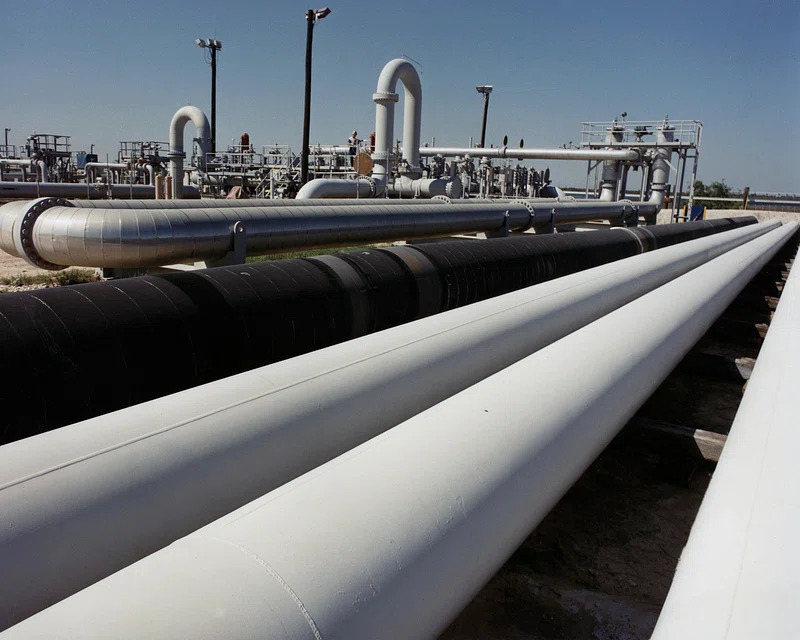
The U.S. is building out its natural gas infrastructure at a historic pace, and Texas is leading the charge, cementing the Lone Star State’s role as the backbone of American energy delivery.
In Texas, progress is measured by results. The latest project tracking data from the U.S. Energy Information Administration makes clear that American midstream operators are not waiting for permission from anti-energy ideologues. They are investing billions of dollars and breaking ground on pipelines that will carry the fruits of Permian Basin production to markets across the country and around the world. By 2027, U.S. natural gas pipeline expansions are set to add 44.9 billion cubic feet per day (bcf/d) of new capacity, and Texas accounts for the lion’s share.
Of the 44.9 bcf/d in planned additions, roughly 70%, or 31.6 bcf/d, has already moved into the construction phase, a sign that industry confidence in long-term natural gas demand remains unshaken. Texas dominates the buildout with 29.7 bcf/d in new capacity, followed by Louisiana at 8.4 bcf/d. These are not speculative projections. They are shovels in the ground, steel in the earth, and infrastructure being built to serve a world that runs on reliable, affordable energy.
The driving forces behind the expansion are straightforward: rising Permian Basin production and surging LNG export demand along the Gulf Coast. As Texas producers continue to set output records, the need to move associated gas out of the Permian efficiently, and reduce chronic congestion around the Waha Hub, has made new pipeline infrastructure an economic necessity. Several of the largest projects under development are specifically designed to connect Permian supplies to the next generation of LNG export terminals taking shape along the Texas and Louisiana coasts.
Among the most significant projects advancing toward service is the Rio Bravo Pipeline, a 138-mile system capable of transporting up to 4.5 bcf/d. The line will link Permian gas to NextDecade’s Rio Grande LNG export project, with service targeted for later this year. The 365-mile Blackcomb Pipeline, designed for 2.5 bcf/d of capacity, is expected online in the third quarter of 2026, providing critical relief for constrained Permian takeaway routes by connecting the Waha area to the Agua Dulce market hub. The Hugh Brinson Pipeline project will add another 2.2 bcf/d in phases, with initial flows expected in the fourth quarter of 2026 and full service planned for early 2027.
The Port Arthur Pipeline Louisiana Connector is expected to begin service in the second half of 2026 with 2 bcf/d of capacity, while the Pelican Pipeline project is projected to enter service by end-2027, bringing total planned Louisiana additions to 8.4 bcf/d. These projects are the connective tissue that makes Texas production globally relevant, linking Permian and Eagle Ford output to the LNG terminals that are fast becoming America’s most powerful tool for energy diplomacy.
The out-of-state activists and climate mandate advocates who oppose pipeline construction at every turn would do well to consider what their obstruction costs: stranded production, higher consumer prices, and a weakened hand for American allies who depend on U.S. LNG as an alternative to Russian and Middle Eastern supply. The EIA data makes the stakes plain. The infrastructure being built today is the foundation of American energy security for the next generation.
Texas producers and midstream operators he represents understand that the pipeline network being constructed across the Lone Star State is how energy gets delivered to the people who need it most.
In winter, as in every season, Texas natural gas proves that reliability is not an aspiration. It is a responsibility met every day, and the infrastructure being built right now ensures it will be met for decades to come.
